

Municipal Waste Systems Leave a Gap in Residential Sanitation, Local Companies Are Stepping In
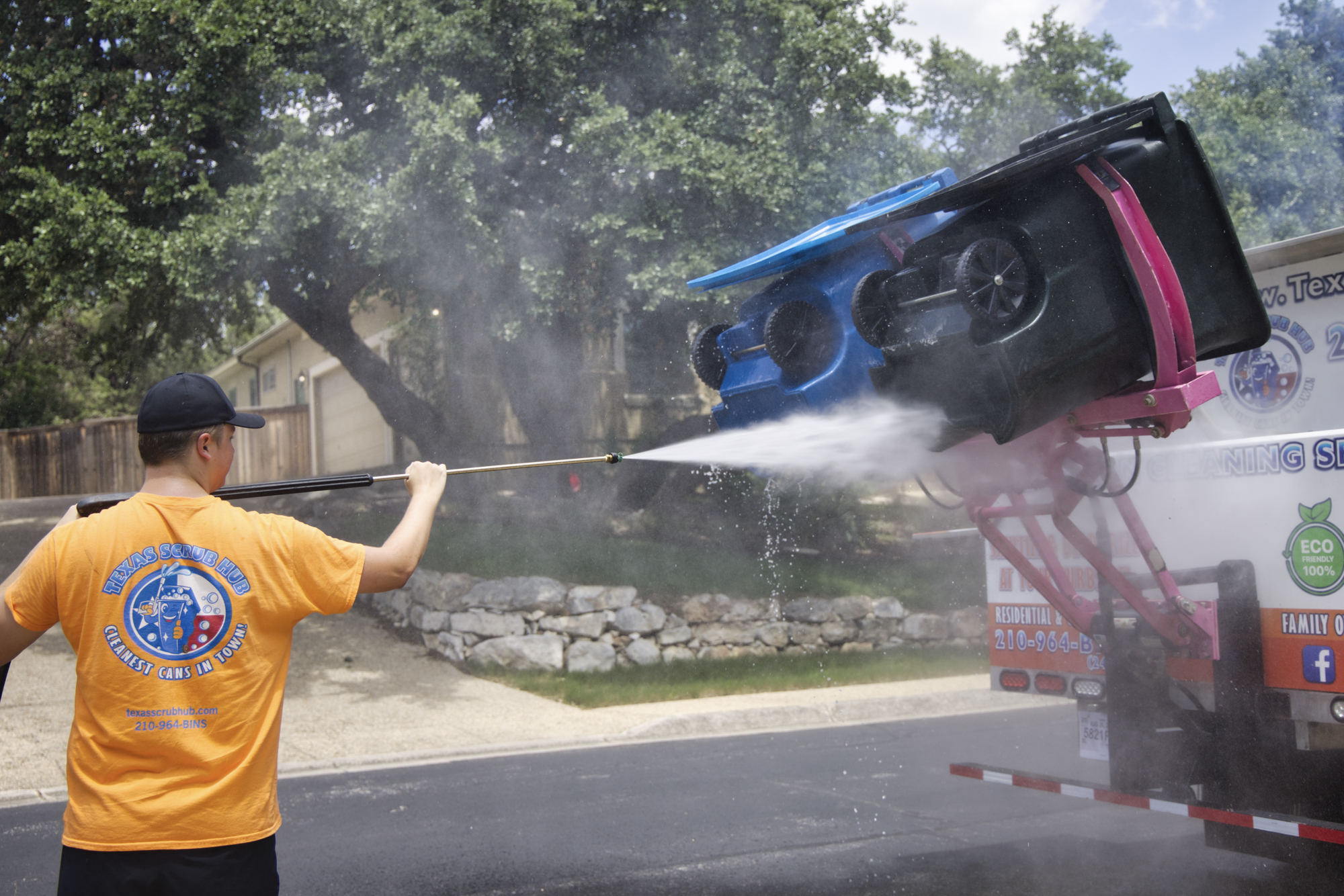
A residential trash bin is cleaned using professional curbside sanitation equipment in a San Antonio neighborhood.
Communities are rethinking residential sanitation as local companies address gaps left by traditional waste systems.
SAN ANTONIO, TX, UNITED STATES, February 9, 2026 /EINPresswire.com/ -- Municipal waste systems across the United States are designed to manage collection, transport, and disposal of household refuse. While these systems are effective at removing waste from residential areas, they typically stop short of addressing the sanitation of the containers themselves. As a result, residential trash bins can become long-term sources of odor, bacteria, and environmental contamination.
This sanitation gap is gaining attention as communities place increased focus on environmental health, neighborhood standards, and waste management practices beyond curbside pickup.
Most municipal waste services prioritize efficiency and scale. Trucks are optimized for collection routes, not container cleaning, and sanitation of residential bins often falls outside the scope of city services. Over time, waste residue accumulates inside bins, particularly during warmer months, creating conditions that attract pests and generate persistent odors.
Publicly available studies from environmental health agencies have shown that household waste containers can harbor bacteria commonly associated with food waste and organic decomposition. While municipalities manage waste removal effectively, the containers themselves are rarely addressed once they are deployed to homes.
As a result, local environmental service providers are emerging to address this overlooked area of residential sanitation.
In cities like San Antonio, locally owned companies have begun offering professional trash bin cleaning services that operate independently of municipal systems. These services focus on sanitizing bins using specialized equipment, high-temperature water, and environmentally conscious practices designed to reduce runoff and water waste.
Texas Scrub Hub is one such company operating in South Texas, where climate conditions can accelerate odor and bacterial growth inside residential waste containers. According to the company, demand for residential bin cleaning has increased as homeowners associations, property managers, and individual residents seek higher sanitation standards around their homes.
“Municipal systems do an excellent job at waste removal, but they were never built to handle container sanitation at the residential level,” said a spokesperson for Texas Scrub Hub. “What we’re seeing is a growing awareness that the bin itself is part of the sanitation equation.”
The rise of these services reflects broader changes in how communities think about waste management. Rather than viewing trash bins as static infrastructure, more residents are recognizing them as high-contact surfaces that require periodic maintenance, similar to dumpsters in commercial settings.
Environmental considerations also play a role. Many professional bin cleaning services utilize closed-loop or controlled water systems that capture and filter wastewater, preventing contaminated runoff from entering storm drains. This approach allows sanitation to occur without placing additional strain on municipal water or drainage systems.
From a business perspective, the growth of residential sanitation services highlights an evolving waste management ecosystem. Municipalities remain responsible for large-scale collection and disposal, while private companies fill in specialized gaps that require flexibility and localized service models.
Industry observers note that this division of responsibility mirrors trends in other areas of environmental services, where public infrastructure is supplemented by private operators focused on niche needs. As communities grow and expectations around cleanliness rise, these hybrid models may become more common.
Homeowners associations and property managers are also taking notice. Clean waste areas can reduce complaints, discourage pests, and contribute to overall neighborhood appearance. In some communities, bin sanitation is now being discussed alongside landscaping, pressure washing, and other routine maintenance services.
While residential trash bin cleaning remains a relatively new category in many markets, its expansion reflects a larger conversation about environmental health at the household level. As municipalities continue to optimize waste collection, local companies are stepping in to address the sanitation details that fall outside traditional public services.
The result is a more comprehensive approach to waste management, one that acknowledges that removing trash is only part of the equation.
About Texas Scrub Hub
Texas Scrub Hub is a women-owned environmental service business based in San Antonio, Texas. The company provides professional residential waste container sanitation services that complement municipal waste management systems by addressing container cleanliness at the household level. For additional context on residential sanitation trends and professional services, see https://texasscrubhub.com
Sacha Faxon
Texas Scrub Hub
+1 210-964-2467
info@texasscrubhub.com
Visit us on social media:
Facebook
Instagram
TikTok
Legal Disclaimer:
EIN Presswire provides this news content "as is" without warranty of any kind. We do not accept any responsibility or liability for the accuracy, content, images, videos, licenses, completeness, legality, or reliability of the information contained in this article. If you have any complaints or copyright issues related to this article, kindly contact the author above.
