

Corporate Wellness: Why Employee Health Benefits Have Become a Retention Imperative

ConciergeMD Logo
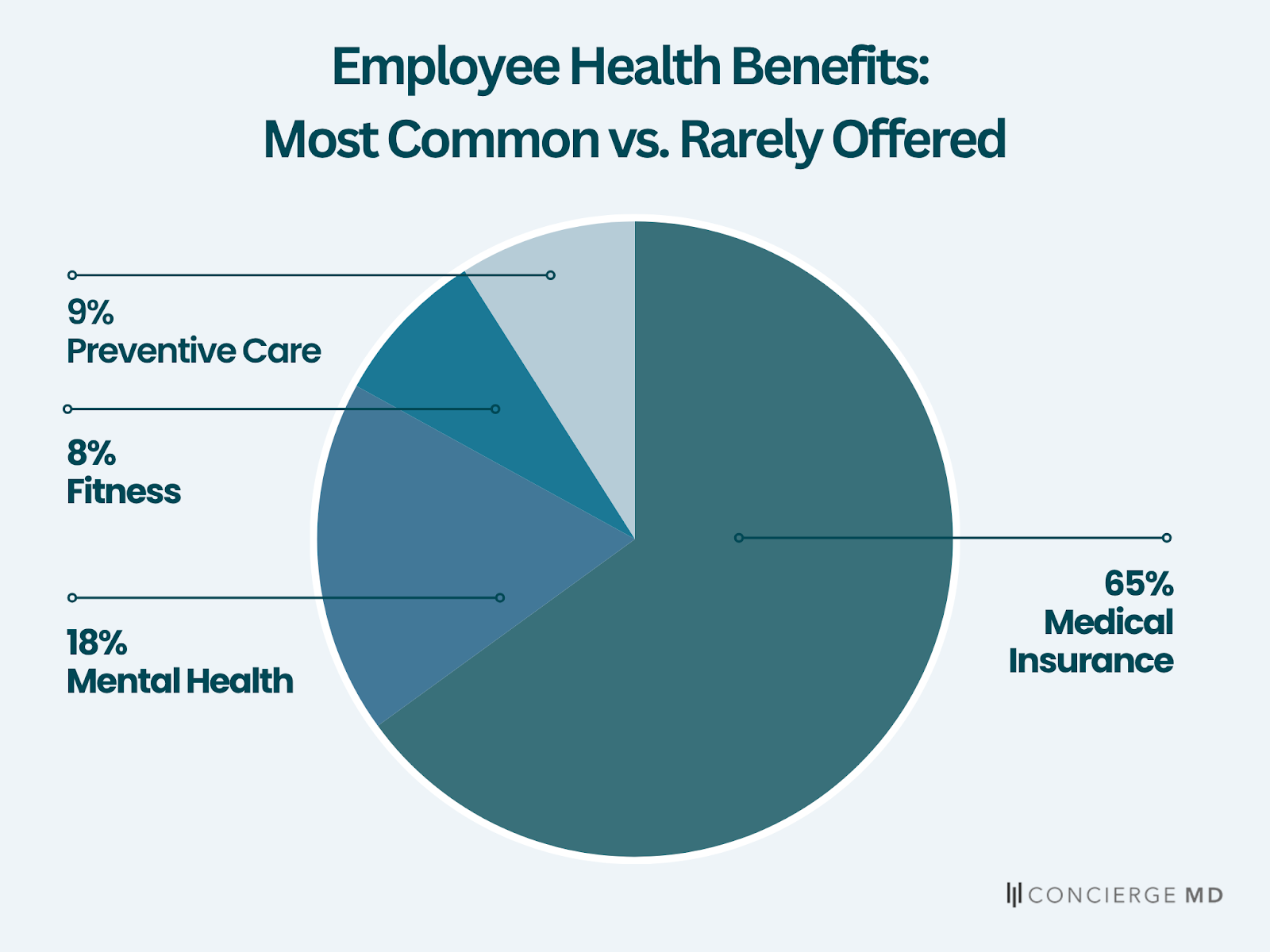
Which health-related job perks are most common in the U.S.?
New analysis finds U.S. employers lag in mental health and preventive care offerings, even as evidence links wellness benefits to retention and performance.
LOS ANGELES, CA, UNITED STATES, January 29, 2026 /EINPresswire.com/ -- A new nationwide study by ConciergeMD has analyzed over 100,000 U.S. job listings and reveals that only half of jobs offer any kind of health benefits. This gap goes beyond missed opportunities for employee support. In an increasingly competitive labor market, it represents a tangible risk to retention, engagement, and employer branding, as employee well-being has shifted from a secondary perk to a core expectation.As absenteeism, burnout, and healthcare costs continue to rise, research increasingly links employee health to productivity, engagement, and workforce stability. Yet many employers across the U.S. continue to underinvest in preventive and individualized health support, despite evidence that these approaches can reduce turnover and long-term labor costs.
Mental Health, Preventive Care, and Fitness Benefits Are Scarce
Three out of four Americans say they would accept a lower salary in exchange for better healthcare benefits, underscoring how strongly well-being now influences employment decisions. Despite these growing expectations, ConciergeMD’s data shows that holistic wellness remains limited in most U.S. job postings. Out of all job listings examined, 49% include employer-sponsored health benefits. Among listings that include any health-related perks, the most common offering is health insurance. Only 18% of listings mention mental health support, such as Employee Assistance Programs (EAPs), therapy, or counseling. Preventive care initiatives, including annual physicals or wellness screenings, appear in just 9% of listings.
Health Benefits as a Strategic Advantage
Employee well-being is increasingly tied to retention and cost control. Replacing a salaried employee can cost, on average, the equivalent of six to nine months of annual salary, once recruitment, onboarding, and lost productivity are factored in. By contrast, HR leaders agree that wellness programs noticeably boost employee productivity and help reduce sick days, turnover, and recruitment costs [1]. Employer-sponsored health insurance and wellness programs can yield an average ROI of up to 47% [2].
"Employee health isn’t a reactive cost center; it is a proactive performance strategy," says Dr. Neal Kumar, board-certified dermatologist and co-founder of ConciergeMD. "Programs that include comprehensive screenings, tailored lab testing, and direct physician access strengthen retention, boost culture, and elevate performance across the board.”
Corporate Wellness in Practice: A Structural Approach Matters
Harvard Business Review notes that preventive wellness initiatives can deliver tangible returns by reducing burnout and stabilizing workforce performance, rather than simply adding another line item to benefits spending [3]. Experts note that not all wellness programs deliver equal results. One-size-fits-all programs often fail to produce measurable outcomes and may exclude employees with chronic conditions, caregiving responsibilities, or high workloads [4]. The value of wellness comes less from isolated perks and more from structured approaches that strengthen long-term health and workforce availability. As Dr. Kumar explains:
“I regularly see employers underestimate the cost of waiting. Too often, health is addressed only once problems surface. Corporate wellness delivers real impact only when designed as a structured strategy with programs tailored to an employee's needs. Employers should choose providers that focus on one-on-one solutions like individual health optimization plans.”
What Personalized Corporate Wellness Looks Like in Practice
Personalized wellness programs move beyond standardized benefits by adapting care to health profiles, roles, and work environments. In practice, such programs rely on health assessments, physician-led consultations, and preventive screenings aligned with personal risk profiles. Programs may also be designed flexibly, ranging from one-time wellness days and leadership retreats to ongoing initiatives that align with company-wide health goals and workforce size.
To reduce administrative burden for HR teams, medically supervised providers increasingly offer end-to-end planning, from scheduling and on-site setup to employee education and medical documentation. This approach allows wellness initiatives to scale, whether for small teams or large organizations, while maintaining consistency, clinical oversight, and participation.
Sources:
[1] Wellhub Study Reveals Strong Return on Investment for Corporate Wellness Programs
[2] Forbes: Employee Well-Being: A New Perspective On ROI
[3] Harvard Business School: How Workplace Wellness Programs Can Give Employees the Energy Boost They Need
[4] Johns Hopkins Bloomberg School of Public Health: Making Workplace Health Promotion (Wellness) Programs "Work"
Methodology: The analysis contains more than 100,000 job postings from popular job portals across 20 major U.S. cities. Employee perks were categorized into seven distinct areas, with most postings offering perks from multiple categories. Cities were selected based on population size and geographic diversity to ensure a representative snapshot of the U.S. workforce. The study spans over 20 industries and includes a breakdown by company size to reveal sector-specific and organizational differences in benefit offerings.
More information about the study, including a full list of sources, can be found at: https://conciergemdla.com/what-100000-job-listings-reveal-about-todays-employee-benefits/
About ConciergeMD: ConciergeMD is on a mission to make better health more convenient for all. Founded by Dr. Abe Malkin and Dr. Neal Kumar, both MD/MBAs from Tufts University School of Medicine, ConciergeMD delivers next-generation care that blends clinical excellence with flexibility. One founder is a board-certified family medicine physician, the other a board-certified dermatologist, bringing together deep expertise in both general and specialized care. Whether you're optimizing your longevity, seeking primary care at home or on the go, or facing an urgent health concern, ConciergeMD delivers personalized in-home and virtual medical services nationwide. Services include comprehensive health assessments, house calls, and round-the-clock virtual visits, all designed to support your health and lifespan. Learn more at www.conciergemdla.com.
Nadine Bloecher
12100 Collective
email us here
Visit us on social media:
Instagram
Facebook
YouTube
Legal Disclaimer:
EIN Presswire provides this news content "as is" without warranty of any kind. We do not accept any responsibility or liability for the accuracy, content, images, videos, licenses, completeness, legality, or reliability of the information contained in this article. If you have any complaints or copyright issues related to this article, kindly contact the author above.
